Author: Kyla

  • Being In A Relationship And Not Abandoning Yourself

    Being In A Relationship And Not Abandoning Yourself

    There seems to be an epidemic happening in relationships. So many of us, especially women, are self-abandoning while in romantic relationships.

    Today, I want to look into what this self-abandonment is, what it looks like, why it happens and how to avoid it.

    What does self-abandonment look like?

    Prioritizing others needs, emotions and desires

    Trouble setting boundaries

    People pleasing behaviors

    Neglecting self-care

    Distrusting your intuition

    Self-critisms

    Suppressing your own feelings and truths

    Codependency

    Why we self-abandon

    Child-hood neglect or abuse

    Invalidation of needs

    Fear of abandonment and rejection

    Perfectionism

    Low-self esteem

    Conditioned survival mechanism

    Unhealthy relationships

    Create a life you love

    Creating a life you love that includes your relationship but doesn’t revolve around it is an essential part to avoiding self-abandonment. Take yourself on dates, have time with friends. Make sure you are spending time on your own hobbies and enjoyments. Free time outside of your relationship is important.

    Setting boundaries

    I could make a whole other post about setting boundaries. But it’s important to be setting boundaries for yourself and others and staying true to yourself.

    Setting boundaries starts with knowing your own limits if you don’t know your own limits you can’t expect to be able to set boundaries for yourself.

    Determine what makes you uncomfortable, stressed or resentful. Know your priorities that helps you know where to draw the line.

    Be direct and clear with your boundaries. Use clear and firm language don’t beat around the bush.

    Use “I feel” statements like “I feel overwhelmed right now.” etc.

    Avoid over explaining or over justifying your boundaries this can weaken your stance and invite arguments.

    Clearly define what will happen if a boundary is crossed such as “If you…then I will…”.

    Boundaries will be tested, be consistent and firm with your boundaries.

    Start small with your boundary setting practice small “no’s” and turning down little requests.

    Remember that boundaries are not selfish, they are a part of self-care and healthy relationships.

    Maintaining your self-identity

    Maintaining yourself identity starts with setting boundaries and pursuing your own personal goals. It’s important to schedule weekly “me time” for you to be able to focus on the things that you enjoy or are trying to work on.

    Keep up with friendships and family connections.

    It can be natural in a relationship to want to spend all your time with your partner, but it’s important to continue to nurture your other relationships as well.

    Self-reflect.

    Make sure you are taking time to reflect on your own emotions, desires and opinions so you aren’t taking on your partners unconsciously.

    On top of everything make sure you are taking proper care of yourself.

    Openly communicating needs

    Openly communicating your needs is different than setting boundaries.

    You first want to identify your needs. Understand what you need in your relationship and take the time to communicate them. Making sure you pick the right time and focus on just one issue at a time.

    Use “I feel” statements as well. Instead of “You never clean up.” say “I feel overwhelmed when you don’t help out.”.

    Practicing self-validation

    Self-validation is all about not needing approval from others. It’s important to acknowledge your own thoughts, feelings and efforts.

    You can do this by:

    Acknowledging your emotions, even negative ones as valid.

    Practicing positive self-talk.

    Treating yourself like a friend.

    Setting those healthy boundaries.

    Practicing mindfullness.

    Accepting your own limitations.

    Addressing red flags

    It’s important to acknowledge and validate your feelings. If something doesn’t feel right it might not be. It’s important to communicate your feelings calmly and directly. Set clear boundaries for yourself.

    It’s also important to take their reaction into consideration. Do they take responsibility? Do they actively work to change their behavior? Or do they mock you or blow off your feelings? These may be further red flags that need to be addressed.

    Seek support from friends outside of your relationship, or if necessary from a professional.

    Make sure you are prioritizing your safety and well-being. If the red flags persist despite open communication or if they may be a sign of abuse it’s better that you end the relationship.

    Avoiding perfectionism

    Relationships aren’t perfect and we can’t make them perfect. Try to avoid perfectionism when it comes to your romantic relationships, or any relationship for that matter. Hardships are going to happen. It’s how you deal with them that matters.

    In conclusion, it can be hard not to self-abandon in relationships, but with self-awareness and some clarity you can mend this and have a healthy wholesome relationship.

    Thank you for reading this post, I hope it was helpful to you.

    Best wishes always,

    Ky <3
  • On A Journey To “Less”. Minimalism And A Simple Life

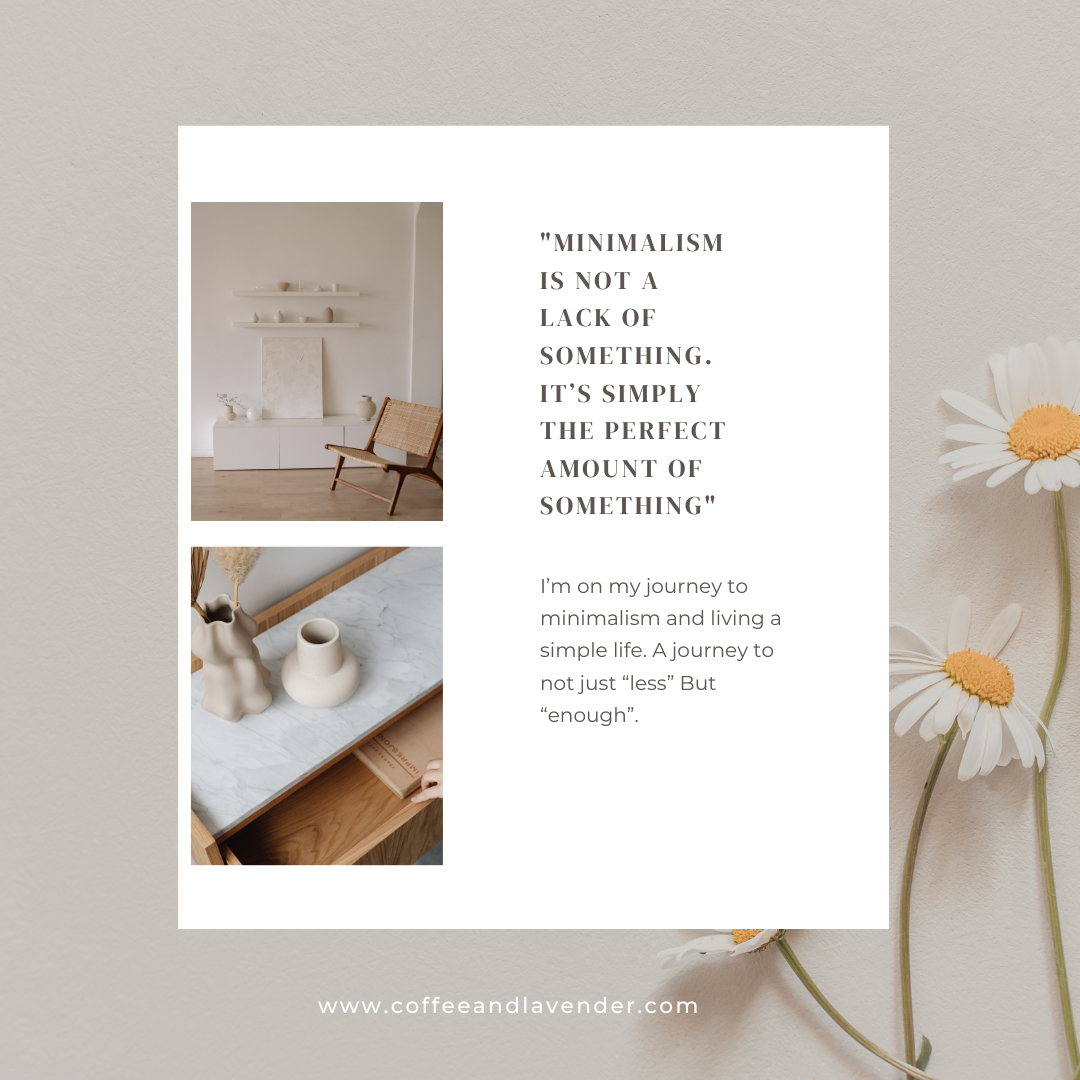
    On A Journey To “Less”. Minimalism And A Simple Life

    “Minimalist is not a lack of something. It is simply the perfect amount of something.” Matt Burroughs.

    I had a friend tell me once, “I wish you enough”. And it’s a sentence I’ve pondered for a long time. Firstly, I know it was a quote from a song of some kind but I can’t remember which song. The origin is a mystery to me. But it’s honestly been a profound lesson over the years. “I wish you enough”. Not exactly the type of well wishing you’d ever expect to want, but it’s become probably one of my most cherished memories and prayers.

    I wish myself enough. I wish myself abundance as well, but not in the expected sense of a frivolous lifestyle with all the things and toys and expensive clothing etc.

    I wish myself in “enough” in the sense of I wish myself enough money to support my life and my hobbies and my children. I wish myself enough things to be happy but not burdened by my “stuff”. I wish myself enough love and friendship that i feel cherished and supported. I wish myself enough success to feel fulfilled but not held down by my responsibilities.

    I’m on a journey to less, but really I’m on a journey to enough.

    Minimalism

    Minimalism has been pretty main stream for a while and I won’t spend a lot of time summarizing it here.

    Essentially, it’s a practice of having the things you need and love, moving away from excess.

    I’ve been on a minimalism journey for a long time, and somehow it still hasn’t clicked with me. I can purge until the cows come home, but keeping my belongings to what I use, love and need seems to be a struggle for me.

    I’m hoping to eradicate this problem and manage to develop better habits.

    My problem I believe is I’ve always focused on just getting rid of stuff, but that’s only part of the journey. The bigger journey is changing our habits when it comes to our things and bringing more things in.

    But minimalism isn’t as simple as just not spending money on things we don’t need, it’s a life style dedicated to the pursuit of less. It’s about the pursuit of just enough.

    And I’m getting serious about it now.

    Social Media

    I’ve decided to cut myself off from social media. I find I just compare too much, I crave too much attention, I feel like I’m not enough. So, I’ve completely deleted my TikTok, Instagram and deactivated my Facebook. It’s been roughly a week of this and I feel so much lighter. I’m beginning to properly come back to myself.

    I find myself really thinking about my time now and how I’m spending it instead of doom scrolling mindlessly.

    Now, I haven’t cut out apps entirely. I still use YouTube, Pinterest and of course I’ve been writing for my blog. But in general, I’ve cut down on my scrolling immensely and find I’m actually much more intentional with my searches and viewings on the apps I still use.

    It’s been a much needed detox.

    My “Stuff”

    Part of my journey is definitely about decluttering (again) and really think about what I’m keeping in my life.

    Like I’ve said this is the easy part for me. Getting rid of the “Stuff” has never been the problem its been changing my other habits around things and spending money.

    Mindless Consumerism

    This is where the problem comes in. I’ve never managed to rid myself of my mindless consumerism habits(yet).

    What’s the point of downsizing and cutting things that no longer serve me out of my life if I’m just going to continue the accumulation of “stuff” in my life.

    The plan is to become much more intentional with what I bring into my life. I want to make sure the things I buy actually serve me.

    My Mind

    When it comes to being minimalist when it comes to my mind, the idea seemed very meta to me at first but after doing some research I realized it was all about fostering the idea of “less is more” when it comes to my thoughts, emotions and mental clarity.

    How I plan to be minimal in this way is through a few simple practices. Like, no longer multi-tasking, “brain-dumping” in my journal daily and focusing on what I consume mentally daily.

    My Time

    I recently read “Essentialism” by Greg McKeown. Greg talks a lot about “less but better” in the book. Essentialism is essentially a guide to focusing time and energy to few tasks that really matter while eliminating the “trivial many.”

    It’s genuinely a good read and I would recommend it whole heartedly.

    Some key take aways from the book include shifting to a “i choose to” from a ” I have to” mindset, actively evaluating to eliminate non-essential activities to focus on what makes the highest contribution, and learning the power of “no”.

    My Habits

    I want to simplify my habits. Again, focusing on the “less is more” mentality by strategically spending my effort on habits that really matter. I don’t want to fill my days with “grunt” work, I want to streamline my daily tasks so they are as efficient as possible.

    Thank you for taking the time to read this post. I hope it was helpful for you.

    Best wishes always,

    Ky <3

  • How To Start Journaling For Beginners

    How To Start Journaling For Beginners

    I’ve been journaling for the better part of sixteen years! Which sounds crazy to me. It’s honestly just a part of my life that I don’t need to think about doing now. It’s so ingrained in my life that it’s become a natural process of living. I always have a journal on the go, I have a collection of 33 finished journals and am on my 34th.

    It’s safe to say I feel confident on giving beginner friendly tips to help you get started journaling.

    Choose a Journal

    You want to pick something that you want to write in, whether that’s a spiral notebook or something leather bound. The journal can be elaborate or something super simple. The important thing is that it feels like YOU.

    Let it be imperfect

    Starting a journal or even starting a new journal makes you feel like it needs to be perfect. Fresh pages do that. But I advice you to avoid perfection. Firstly, it stunts your creative mind, secondly, it can cause you not to keep up with it due to the pressure.

    Let it be imperfect.

    Make it easy to do

    You want to make journaling easy to do by keeping your journal out in a place you can see it and use it.

    Start with Gratitude

    Gratitude is a great place to start especially if you aren’t sure what to write.

    Write Freely

    Try not to focus too hard on what it is you are going to write, just write whatever you are thinking, feeling or even what you are wanting to do.

    When I’m journaling I often spend time narrating where I’m at with the day, what I’m doing, what I plan to do etc. But journaling can encompass so many things and for me it encompasses everything. From lists, to budgeting, poetry, favorite song lyrics etc.

    There is no limit to what you can write about.

    Start Small

    you don’t need to journal pages at a time. Start with 2-3 sentences. It will make a world of difference to your consistency.

    Remember there is no “right” way to journal

    Remember this is YOUR time, your journal. There is no write or wrong way. Bullet points are fine, lists, poems etc. It’s all okay. It’s about what is right for you.

    Attach it to an existing habit

    If you sit and have coffee every morning you can sit and journal every morning. Or maybe it works better to attach it to going to bed and you decide to journal every night before you go to sleep. Either way there are plenty of habits you can stack with your new journaling habit.

    Use Prompts (Especially at first)

    Prompts are a great tool no matter what stage you are at on your journaling journey. They are also so easy to find. You can use Pinterest or even chat GBT to help you come up with prompts to get you started.

    Give yourself permission to skip days

    I’ve been journaling for over 16 years now and this is one way I’ve managed to keep at it. Some days I don’t journal at all, heck, some weeks I don’t journal at all!

    Remember this is something that’s meant to be for YOU. Yes, you want to make it a habit but that doesn’t mean chaining yourself to that habit.

    And of course most important of all HAVE FUN. Journaling is an amazing tool but it’s also about enjoying the time you take with yourself.

    I hope this post has been helpful to you. I’ll be writing more on journaling in the future for sure, but I figure this is a good start.

    Best wishes always,

    Ky <3

  • I’m Taking A Year (At Least) To Be Single

    I’m Taking A Year (At Least) To Be Single

    Since my first long-term relationship ended with the father of my oldest son, I’ve had a revolving door of toxic and abusive relationships. For almost a decade I haven’t spent so much as six months completely on my own.

    I’m on a mission to change that.

    So, I am dedicating a year (at least) to being single. Here’s how I’m doing it.

    The Rules

    No Dating

    This one is simple but also the main point. No more dating apps, no more searching people out and no dating even if I find someone I’m interested in more organically.

    No Sex

    There is nothing wrong with being single and still having a sex life. But my focus is entirely on myself and my relationship with myself so I’m avoiding complicating my efforts by taking sex out of the equation.

    Focusing On The Positives Of Being Single

    It can be really easy to get into all the negatives of being single, especially when you haven’t been single in a long time. I want to keep my focus on all the positives and stay the course.

    The Why’s

    To Learn How To Be On My Own Again

    To Regain My Freedom

    To Figure Out What I Want

    To Work On Self Improvement

    To Learn Self-Love

    To Learn To Self-Soothe

    The How

    My whole plan for this next year is to focus on improving myself and getting closer to my truth and what I truly want for my life.

    Taking A Step Back From Social Media

    Not only am I tired of comparing myself to others online, but I’m tired of the screen-time and focus society has on couples or if you are single trying not to be single. I’ve deleted my TikTok and deactivated my Facebook, the only socials I want to be using are Pinterest, my blog and YouTube.

    Focusing On Being Self-Partnered

    There’s being single and then there is being self-partnered. Emma Watson was the one who brought popularity to the term self-partnered. Being self-partnered is more than just being single, it’s actively working on the relationship you have with yourself and nurturing your whole being like a partner would.

    Working On My Physical Health

    A big focus this next year is going to go towards my physical health, my sleep hygiene, my daily routines, nourishing and moving my body.

    Working On My Mental Health

    I’ve been working hard on my mental health for many years now, but this year I really want to get serious. This includes things like working on my self-love, self-soothing and confidence.

    Focusing On Family And Friends

    I think this is going to be a huge help for me. Focusing on nurturing the relationships outside of romance is going to really make a difference when it comes to stay social and avoiding dating.

    Conclusion

    taking a year to be single is going to take work but it’s going to be fulfilling work. I plan to enrich my life with my independence and start living my life on my own terms.

    Thank you for reading this post, I hope it was helpful to you. I look forward to continuing to share my self-partnered journey with you.

    All the best wishes,

    Ky <3

  • How To Get Better Sleep And Why It’s Important

    How To Get Better Sleep And Why It’s Important

    I’m on a mission. This mission is to improve my sleep hygiene and reap all the benefits that come with it! The biggest thing, is I want to begin my days at 5am (Woot woot, 5am Club!). But you don’t have to have the same goal as me to enjoy the benefits of a good nights sleep!

    What is Sleep Hygiene?

    Sleep Hygiene refers to a set of habits, behaviors and controlled environmental factors that contribute to consistent quality of sleep.

    Essentially, it’s everything you do or don’t do to maintain a healthy sleep and wake schedule.

    The Benefits of Good Sleep Hygiene

    1. Sharper concentration
    2. Better memory
    3. Higher productivity
    4. Reduced stress
    5. Reduced irritability
    6. Supports immune function
    7. Helps maintain a healthy weight
    8. Reduces inflammation
    9. Lowers blood pressure reducing risk of heart disease and stroke
    10. Improves skin significantly
    11. Improves weight loss and muscle growth after exercise

    This is not an exhaustive list. Good sleep improves such a wide range of physical and mental health, it really is a super power. Still too many people are considering proper sleep a “luxury” and not a necessity.

    What I’m Doing

    I’ve suffered from insomnia pretty much my entire life, so if I can do it, you absolutely can. Where there is a will there is a way.

    1. Lowering screen time, especially before bed.
    2. Creating a consistent bedtime schedule
    3. Having a relaxing bedtime routine
    4. Avoiding caffeine past 1 pm

    Ways to Improve Sleep

    Consistency is key

    Having a consistent sleep routine is huge when it comes to sleep hygiene. Going to bed at the same time every night helps train your internal clock.

    Watch what you eat and drink

    You don’t want to be stuffing yourself or starving yourself before bed. Avoid heavy meals 2-3 hours before sleep and cut out things like alcohol, nicotine and caffeine as well. Caffeine after 1pm can hinder sleep. Alcohol may make you more sleepy to start but it actually disrupts sleep later in the night. Nicotine is just terrible in general but trying to avoid it in the few hours before sleep can help to create a more restful sleep.

    Optimize your environment

    Making your room cool, dark and quiet is important for proper sleep. Even a little bit of light in your room can disrupt your brain and keep it going, try to move clocks and any light source so they aren’t visible. A temperature between 60 and 67 degrees F is optimal for good sleep.

    Day time naps

    You want to be limiting your day time naps if you can’t avoid napping all together. There is research that shows naps have a benefit to over all brain function and health, (but thats a whole other post topic) so I don’t want to say avoid them completely. But you should try to keep them at 20 to 30 minutes and avoid any naps after 3 pm.

    Daily physical activity

    Adding daily physical activity into your routine is a good way to improve your over all sleep quality. Just avoid any heavy exercise in the hours before bed, opt instead for something relaxing like yoga or light stretching if your going to exercise before bed.

    Manage stress

    Stress does crazy things to our body and mind but it especially messes with our ability to sleep and our ability to get proper restful sleep. Managing stress is the best way to get the best sleep possible.

    Limit your bed use

    Your bed should only be used for sleep and sex. Try to avoid working in bed or lounging on a screen.

    Utilize relaxation techniques

    Having a relaxing nighttime routine will help improve your ability to sleep as well as the quality of your sleep. Having a warm bath or shower, reading, doing yoga or meditating before bed are all ways you can help yourself relax and get into a sleepy state.

    All in all even improving a few of these areas or utilizing a couple of these techniques will help improve your overall sleep hygiene and thus improve your over all health and wellbeing.

    Thank you so much for reading, I hope this post has helped you on your journey to a more restful sleep.

    Much love,

    Ky <3