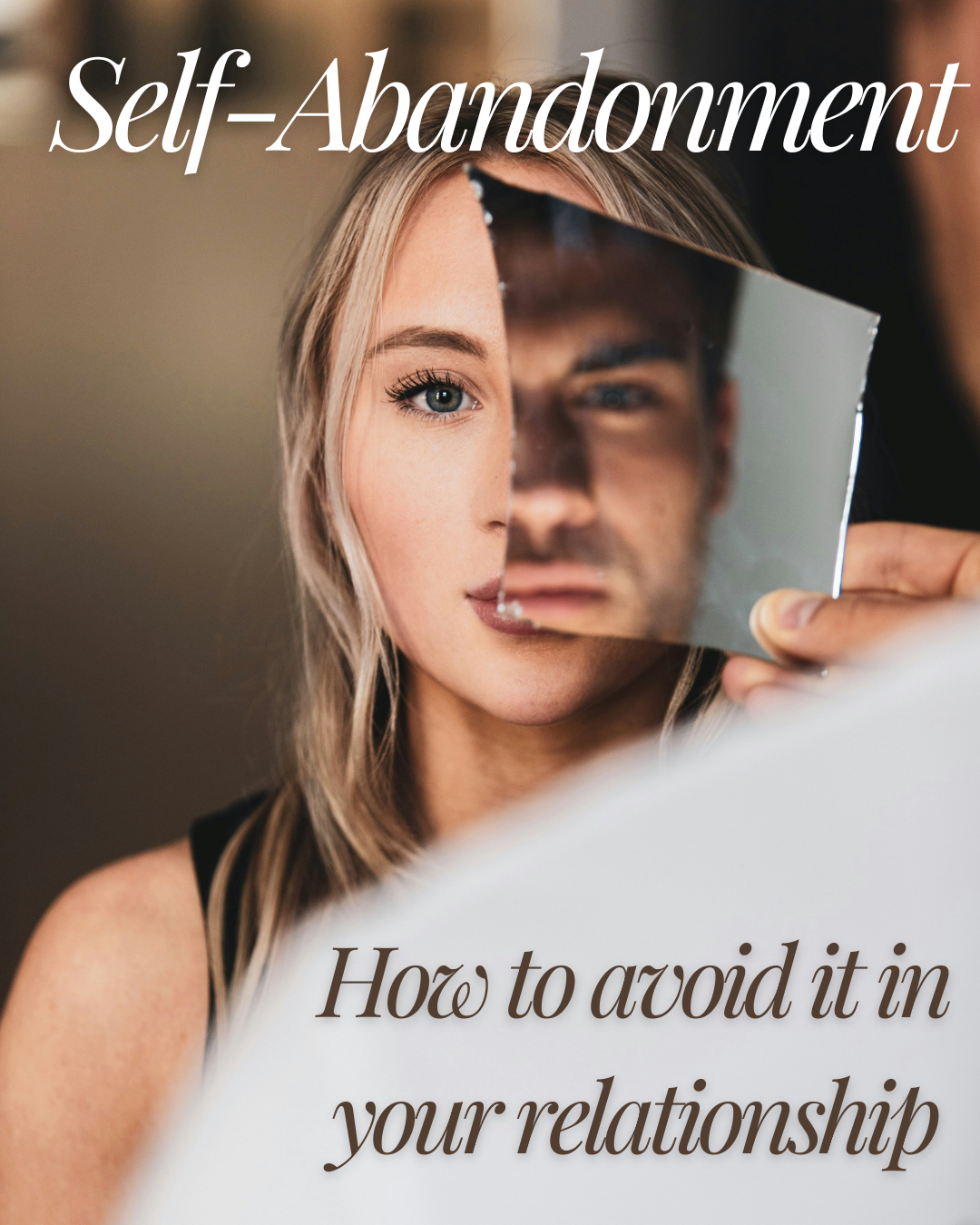
There seems to be an epidemic happening in relationships. So many of us, especially women, are self-abandoning while in romantic relationships.
Today, I want to look into what this self-abandonment is, what it looks like, why it happens and how to avoid it.
What does self-abandonment look like?
Prioritizing others needs, emotions and desires
Trouble setting boundaries
People pleasing behaviors
Neglecting self-care
Distrusting your intuition
Self-critisms
Suppressing your own feelings and truths
Codependency
Why we self-abandon
Child-hood neglect or abuse
Invalidation of needs
Fear of abandonment and rejection
Perfectionism
Low-self esteem
Conditioned survival mechanism
Unhealthy relationships
Create a life you love
Creating a life you love that includes your relationship but doesn’t revolve around it is an essential part to avoiding self-abandonment. Take yourself on dates, have time with friends. Make sure you are spending time on your own hobbies and enjoyments. Free time outside of your relationship is important.
Setting boundaries
I could make a whole other post about setting boundaries. But it’s important to be setting boundaries for yourself and others and staying true to yourself.
Setting boundaries starts with knowing your own limits if you don’t know your own limits you can’t expect to be able to set boundaries for yourself.
Determine what makes you uncomfortable, stressed or resentful. Know your priorities that helps you know where to draw the line.
Be direct and clear with your boundaries. Use clear and firm language don’t beat around the bush.
Use “I feel” statements like “I feel overwhelmed right now.” etc.
Avoid over explaining or over justifying your boundaries this can weaken your stance and invite arguments.
Clearly define what will happen if a boundary is crossed such as “If you…then I will…”.
Boundaries will be tested, be consistent and firm with your boundaries.
Start small with your boundary setting practice small “no’s” and turning down little requests.
Remember that boundaries are not selfish, they are a part of self-care and healthy relationships.
Maintaining your self-identity
Maintaining yourself identity starts with setting boundaries and pursuing your own personal goals. It’s important to schedule weekly “me time” for you to be able to focus on the things that you enjoy or are trying to work on.
Keep up with friendships and family connections.
It can be natural in a relationship to want to spend all your time with your partner, but it’s important to continue to nurture your other relationships as well.
Self-reflect.
Make sure you are taking time to reflect on your own emotions, desires and opinions so you aren’t taking on your partners unconsciously.
On top of everything make sure you are taking proper care of yourself.
Openly communicating needs
Openly communicating your needs is different than setting boundaries.
You first want to identify your needs. Understand what you need in your relationship and take the time to communicate them. Making sure you pick the right time and focus on just one issue at a time.
Use “I feel” statements as well. Instead of “You never clean up.” say “I feel overwhelmed when you don’t help out.”.
Practicing self-validation
Self-validation is all about not needing approval from others. It’s important to acknowledge your own thoughts, feelings and efforts.
You can do this by:
Acknowledging your emotions, even negative ones as valid.
Practicing positive self-talk.
Treating yourself like a friend.
Setting those healthy boundaries.
Practicing mindfullness.
Accepting your own limitations.
Addressing red flags
It’s important to acknowledge and validate your feelings. If something doesn’t feel right it might not be. It’s important to communicate your feelings calmly and directly. Set clear boundaries for yourself.
It’s also important to take their reaction into consideration. Do they take responsibility? Do they actively work to change their behavior? Or do they mock you or blow off your feelings? These may be further red flags that need to be addressed.
Seek support from friends outside of your relationship, or if necessary from a professional.
Make sure you are prioritizing your safety and well-being. If the red flags persist despite open communication or if they may be a sign of abuse it’s better that you end the relationship.
Avoiding perfectionism
Relationships aren’t perfect and we can’t make them perfect. Try to avoid perfectionism when it comes to your romantic relationships, or any relationship for that matter. Hardships are going to happen. It’s how you deal with them that matters.
In conclusion, it can be hard not to self-abandon in relationships, but with self-awareness and some clarity you can mend this and have a healthy wholesome relationship.
Thank you for reading this post, I hope it was helpful to you.
Best wishes always,
Ky <3